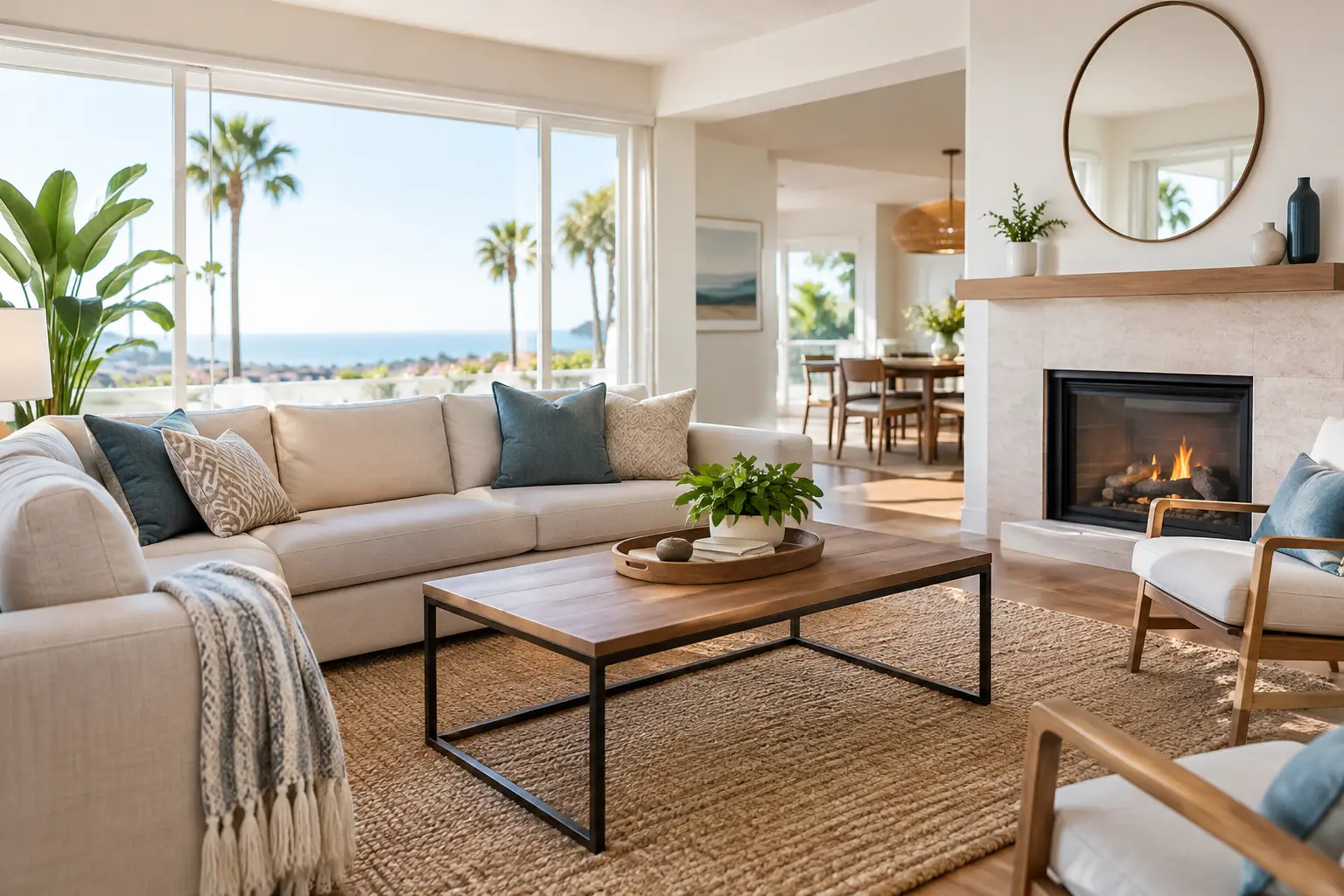
A buyer may spend only a few seconds deciding whether a listing feels worth a closer look. In Southern California, where buyers often compare multiple properties in a single weekend, home staging is not decoration for decoration’s sake. It is a sales strategy that helps a property photograph better, show with more purpose, and give buyers a clearer reason to act.
A staged home helps people picture their next chapter there. It can make a compact condo feel more functional, a dated living room feel more current, or a large luxury home feel warm rather than empty. The goal is not to make every property look identical. The goal is to present its strongest features in a way that aligns with the buyers most likely to compete for it.
Why Home Staging Changes the Sale
Most buyers begin their search online, and their first impression is formed before they ever schedule a tour. Photos, short-form video, floor plans, and virtual walk-throughs all work harder when the rooms have a defined purpose and a clean visual flow. Empty corners, crowded countertops, mismatched furniture, and personal collections can distract from square footage, natural light, and architectural details.
Staging also supports pricing strategy. A well-positioned listing does not rely on staging to overcome an unrealistic price, deferred maintenance, or poor location. But when a home is priced in line with current market activity, the right presentation can increase attention and help buyers understand its value faster. More attention can mean more showings, stronger feedback, and a better opportunity to create momentum early in the listing period.
For sellers in communities such as Arcadia, San Marino, and San Gabriel, presentation matters because buyers often have clear expectations around condition, lifestyle, and long-term value. A polished property signals care. It tells buyers that the home has been prepared thoughtfully, which can reduce hesitation even when they know they will make their own updates after closing.
Start With the Buyer’s First 30 Seconds
The entry, living room, and kitchen usually do the most work. These are the spaces buyers remember when they leave, and they are often the first rooms featured in listing media. Start by removing items that make a space feel smaller or overly personal: excess furniture, family photos, oversized décor, crowded open shelving, and anything stored in plain sight.
That does not mean stripping the home of all personality. A room should still feel lived in and comfortable. A few intentional accessories, fresh greenery, neutral textiles, and appropriately scaled furniture can make a home feel inviting without turning it into a showroom that feels disconnected from real life.
Light is another high-return detail. Open window coverings when privacy allows, replace burned-out bulbs, and use consistent warm lighting throughout the home. Buyers respond to bright rooms because light makes spaces appear cleaner, larger, and more usable. If a room has a view, staging should direct attention toward it rather than blocking it with heavy furniture or cluttered window treatments.
Home Staging for Photos, Video, and Showings
A property now has to perform across several formats. The room that looks acceptable in person may look dark, cramped, or unfinished on a phone screen. Before photography, every surface should be reviewed through the camera’s perspective. Kitchen counters should be mostly clear, bathroom toiletries should disappear, cords should be hidden, and pet supplies should be stored away.
For video, create visual movement through the home. A dining table set simply for four, a reading chair near a window, or a neatly arranged outdoor seating area gives viewers an immediate sense of how the space can be used. These details are especially valuable for buyers relocating from another area or investors reviewing a property remotely.
Digital marketing can extend the value of staging well beyond the first open house. Strong images and short-form content help a listing stand out across social platforms where buyers discover homes through quick, visual decisions. At Aspire La Shine, the marketing approach is built around this connection between property preparation and listing visibility: the better a home communicates on screen, the stronger its chance to reach the right audience before competing listings capture their attention.
Showings require a slightly different standard. The property should smell neutral, feel comfortable, and stay easy to navigate. Avoid strong candles, heavy fragrances, or cooking odors. If the home is occupied, have a simple daily reset routine: make beds, empty trash, clear counters, put away laundry, and secure valuables. Consistency matters because a showing can be scheduled with little notice.
Where to Spend and Where to Save
Not every home needs a full furniture installation. The right staging budget depends on the property’s price point, condition, target buyer, and whether it is vacant or occupied. A seller with a move-in-ready townhouse may need editing, paint touch-ups, and professional styling. A vacant luxury residence may benefit from a more complete staging plan because large empty rooms can be difficult to read online and in person.
Spend first on improvements buyers can see immediately. Fresh interior paint in a current neutral color, deep cleaning, landscape cleanup, updated lighting, repaired hardware, and well-maintained flooring can often deliver more value than trendy décor. If the kitchen or bathrooms are older but functional, styling them cleanly and addressing obvious wear may be a smarter decision than beginning a major renovation right before listing.
Save money by avoiding design choices that are too personal or too specific. Bold wall colors, statement wallpaper, and expensive custom finishes can work in the right home, but they may narrow the buyer pool if they do not match local expectations. The better question is not, “What would I choose for myself?” It is, “What helps the widest qualified group of buyers see value here?”
Occupied, Vacant, and Luxury Homes Need Different Plans
An occupied home has the advantage of already feeling functional, but sellers need to edit aggressively. Furniture should support the room’s purpose, not simply fill it. A spare bedroom used for storage should be converted into a clear office, guest room, or fitness space depending on the likely buyer. Buyers should never have to guess whether a room can serve a practical need.
Vacant homes need enough furniture and décor to establish scale. Without it, buyers may underestimate room sizes or struggle to imagine furniture placement. Staging the main living area, primary bedroom, dining space, and key outdoor area is often more effective than furnishing every room equally.
Luxury properties require restraint and precision. High-end buyers notice quality, condition, and proportion quickly. The staging should complement premium materials, architectural features, and outdoor living areas without competing with them. In a larger home, empty space can be powerful when it is intentional. The objective is to create confidence, not visual noise.
Staging Mistakes That Can Cost Attention
The most common mistake is treating staging as a last-minute task after photos are already scheduled. Rushed preparation leads to missed repairs, clutter in listing images, and a property that enters the market before it is ready to make its best impression.
Another mistake is using staging to conceal problems. Rugs cannot solve damaged floors, furniture cannot fix a leaking ceiling, and strategic angles cannot permanently overcome visible neglect. Buyers, inspectors, and appraisers will see past cosmetic cover-ups. Address material issues first, then use staging to highlight what is truly working.
Finally, do not over-stage. Too many pillows, artificial props, tiny furniture, or impractical room layouts can make buyers feel they are looking at a set rather than a home. Authenticity matters. Buyers should be able to imagine living there on an ordinary Tuesday, not just visiting it for an open house.
Build Staging Into Your Listing Timeline
The best time to discuss home staging is before the listing goes live, ideally before photography and pricing are finalized. Walk through the property room by room and identify what needs repair, what needs removal, and what needs a simple visual upgrade. This creates a practical sequence instead of a stressful scramble.
A focused plan may take only a weekend for an occupied, well-kept property. A vacant home, an inherited property, or a residence with deferred maintenance may need more coordination. Either way, giving preparation the right amount of time helps protect the launch of the listing, when buyer interest is typically at its highest.
The strongest staging does not ask buyers to overlook reality. It gives them a confident, immediate view of what the property can offer - and that clarity is often what turns an online scroll into a showing, a showing into an offer, and an offer into a successful sale.